Quick answer
Size a dehumidifier by how damp the space is, then by how big it is. ENERGY STAR’s chart suggests 20–30 pints per day for a slightly to moderately damp space, 25–40 pints for a very damp one and 30–50 pints for a wet one, with more for larger areas. When in doubt, go one size up. If you are replacing a unit bought before 2020, don’t match the old number: a new test procedure means today’s ratings are lower for the same machine, so an old 50-pint unit corresponds to roughly 30 pints now.
What “pints per day” means
A dehumidifier’s capacity is the amount of water it removes in 24 hours under standard test conditions, reported in pints per day. The U.S. Department of Energy sets the test method. It is a way to compare models, not a promise of how much water you will empty from the bucket in your home: real output depends on the room’s temperature and humidity.
Colder, drier air holds less water, so any dehumidifier removes less of it in a cool basement than in a warm, muggy room. That is why the same unit can fill its bucket in a day in August and barely collect anything in a chilly spring basement.
Step 1: How damp is the space?
ENERGY STAR sorts spaces into three conditions, measured before you run a dehumidifier. A hygrometer gives you the humidity number; your nose and eyes give you the rest.
| Condition | What you notice | Relative humidity |
|---|---|---|
| Slightly to moderately damp | Feels damp; musty odor that may come and go | 50–75% |
| Very damp | Consistently feels and smells damp; damp spots on walls and floors | 75–90% |
| Wet | Walls or floor sweat, or seepage is present; heavy loads such as laundry drying | 90–100% |
Watch out: “wet” conditions with seepage through walls or floors are a water problem first. The EPA’s advice is to fix leaks and water problems and to dry wet materials within 24–48 hours. A dehumidifier helps dry the air, but it will not stop water coming through a foundation.
Step 2: Pick a capacity from the chart
With the condition in hand, read across to the size of the space. These are ENERGY STAR’s recommended minimum capacities for portable dehumidifiers under the current ratings:
| Condition without dehumidification | Small–medium space (under 2,000 sq ft) | Large space (over 2,000 sq ft) |
|---|---|---|
| Slightly to moderately damp | 20–30 pints/day | 30+ pints/day |
| Very damp | 25–40 pints/day | 40+ pints/day |
| Wet | 30–50 pints/day | 50+ pints/day |
ENERGY STAR adds two practical rules. First, it is better to oversize than undersize: an undersized unit runs constantly and may never reach your target humidity. Second, if you are replacing an existing dehumidifier, you can judge by how much water you empty each day.
Why dehumidifier ratings dropped after 2019
If your old dehumidifier was a “70-pint” model and the store now tops out lower, the machines did not get weaker. The Department of Energy changed the test. Since June 2019, portable dehumidifiers are tested at 65 °F instead of 80 °F, to better reflect a basement. Cooler air holds less water, so the same machine reports a smaller capacity. ENERGY STAR publishes this rough conversion:
| Old portable rating (through 2019) | Approximate new rating (2020 on) |
|---|---|
| 30 pints/day | 20 pints/day |
| 40 pints/day | 25 pints/day |
| 50 pints/day | 30 pints/day |
| 55 pints/day | 30–35 pints/day |
| 60 pints/day | 35 pints/day |
| 70 pints/day | 40–45 pints/day |
| 90 pints/day | 55 pints/day |
Worked example
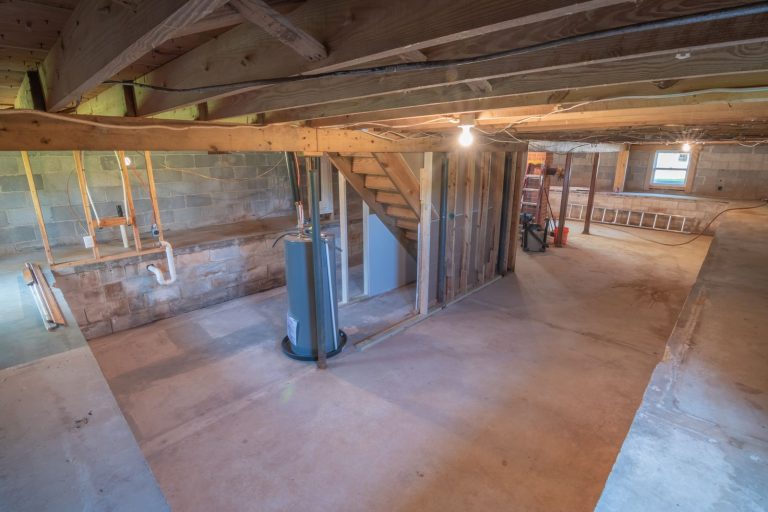
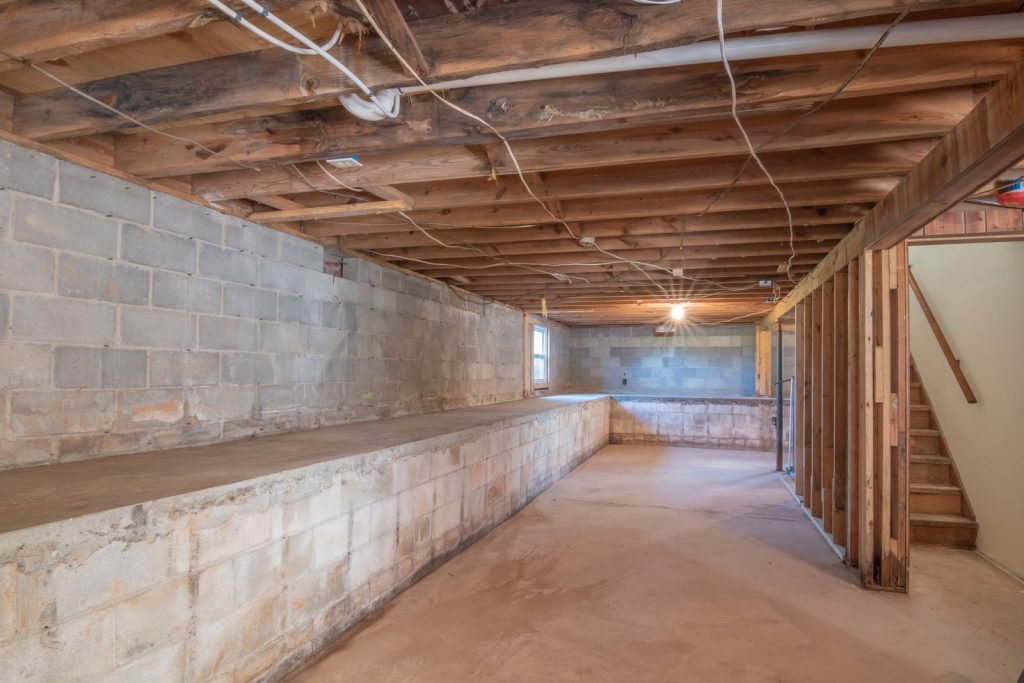
Assumed situation: a 1,000 sq ft basement that always smells damp, with a few damp spots on the floor. A hygrometer reads 78% before any dehumidifier runs. The old unit, bought in 2015, was rated 50 pints/day and kept up well.
- Condition: 78% and persistent odor → “very damp”.
- Size: 1,000 sq ft → small–medium column → 25–40 pints/day.
- Cross-check with the old unit: old 50 pints ≈ new 30 pints.
- Both point to roughly 30–40 pints/day on today’s labels. Following “better to oversize”, the upper half of that range is the safer choice.
Illustrative example with assumed values, using ENERGY STAR’s charts.
Other things that change the right size
- Temperature. If the space often drops below 65 °F, ENERGY STAR suggests a model specified for lower temperatures. Frost can form on the coils in cold air, making the compressor cycle without removing moisture; some models have an anti-frost sensor.
- Moisture load. Laundry drying, a shower in the basement or a sump pit add moisture every day. ENERGY STAR places laundry drying in the “wet” category.
- Open doors. ENERGY STAR advises keeping doors and windows to the space closed while the unit runs. A basement open to the rest of the house is effectively a larger space.
- Draining. Most portables have a bucket with automatic shutoff; many can connect a hose to a floor drain or sump. In a wet space, a hose matters more than capacity: a full bucket removes nothing.
- Efficiency. Efficiency is rated as Integrated Energy Factor (IEF), in liters of water removed per kWh; higher is better. ENERGY STAR says certified models use about 20% less energy than conventional ones of similar size.
Portable or whole-home? ENERGY STAR describes whole-home dehumidifiers as working through the home’s air ducts, and says they carry significant benefits for relatively well-sealed homes with central air that see humidity above 55% consistently throughout the house. They should be sized and installed by a professional. For a single damp basement or room, a portable unit is the usual choice.
What humidity to aim for once it is running
ENERGY STAR considers 30–50% relative humidity the optimum range, noting that levels above it may promote mold growth, and suggests 30–40% during the heating season in colder climates to prevent window condensation. The EPA recommends keeping indoor humidity below 60%, ideally 30–50%. All ENERGY STAR dehumidifiers have a built-in humidistat, so you set the target and the unit cycles on and off to hold it.
A correctly sized unit reaches the target and then cycles. If yours runs nonstop for days and the reading stays above target, it is undersized for the conditions, the space is open to other areas, or water is still getting in.
Frequently asked questions
Is it bad to buy a dehumidifier that is too big?
ENERGY STAR says it is better to oversize than undersize. A larger unit with a humidistat reaches the target and cycles off; an undersized one may run all the time without getting there.
What size dehumidifier for a basement?
It depends on dampness more than area. A basement under 2,000 sq ft that feels slightly damp calls for 20–30 pints/day on current ratings; a very damp one 25–40; a wet one 30–50. Fix any seepage first.
Why is my new 35-pint dehumidifier as strong as my old 60-pint one?
Because they were tested differently. Since June 2019, portable units are tested at 65 °F instead of 80 °F, which lowers the rated number. ENERGY STAR’s conversion puts an old 60-pint unit at about 35 pints today.
Will one dehumidifier do the whole house?
A portable unit treats one space well, especially with doors closed. Whole-house humidity control usually means a ducted whole-home unit, which ENERGY STAR recommends having sized and installed by a professional.
Sources
- ENERGY STAR (U.S. EPA). Dehumidifiers: sizing chart, conditions, operating temperature, draining, IEF, humidistat and humidity targets, whole-home units.
- ENERGY STAR. Dehumidifier Testing and Capacity: 2019 test procedure change and old-to-new capacity table.
- U.S. EPA. A Brief Guide to Mold, Moisture and Your Home: humidity targets and fixing water problems.
Next step