Quick answer
Aim for 30–50% relative humidity indoors. The EPA recommends keeping it below 60% and ideally between 30% and 50%; the CDC advises no higher than 50% to prevent mold. In cold climates during the heating season, ENERGY STAR suggests 30–40% to avoid window condensation. Measure it with an inexpensive digital hygrometer placed at chest height, away from windows, bathrooms and heat sources, and check a few rooms over several days before changing anything.
What relative humidity means
Relative humidity (RH) is the amount of water vapor in the air compared with the most the air could hold at that temperature, expressed as a percentage. ENERGY STAR uses this definition in its dehumidifier guidance. The key word is relative: warm air can hold more water than cold air, so the same amount of moisture gives a lower RH in a warm room and a higher RH in a cool one.
This explains two everyday puzzles. A cool basement often reads high even though nobody showers there. And a heated house in January can read low even though people cook and shower as usual, because cold outdoor air that leaks in carries little moisture and its RH drops as it warms up.
The recommended range, by agency
| Source | What it recommends | Why |
|---|---|---|
| EPA (mold guidance) | Below 60%, ideally 30–50% | Humidity can supply enough moisture for mold growth |
| EPA (indoor air quality) | 30–50% | High humidity increases the likelihood of mold |
| CDC | As low as you can, no higher than 50%, all day long | Mold prevention |
| ENERGY STAR | 30–50%; 30–40% in the heating season in colder climates | Above 50% may promote mold; lower in winter to prevent window condensation |
| EPA (humidifiers) | Do not humidify above 50% | Higher levels may encourage growth of biological organisms |
The agencies agree on the core: stay under 50% most of the time and don’t let it sit at 60% or above. The EPA’s mold course also notes that low humidity may discourage pests such as cockroaches and dust mites.
Why winter needs a lower target
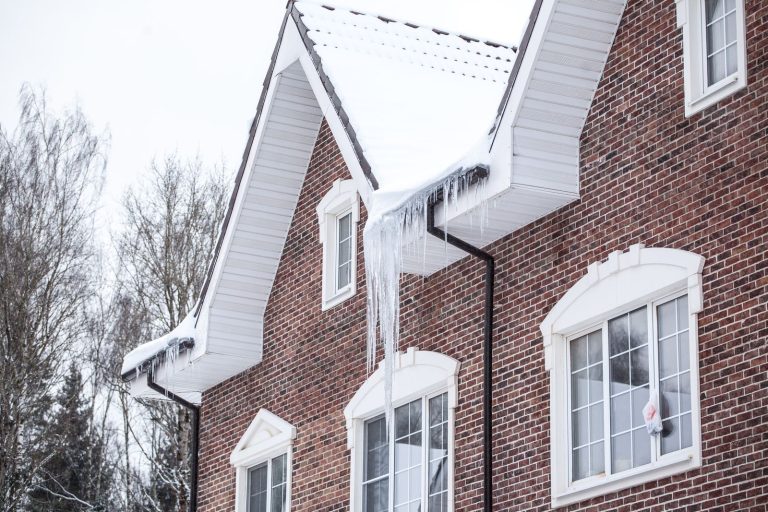
In cold weather, windows and exterior wall corners get cold. Humid indoor air condenses on any surface colder than its dew point, so a humidity level that is harmless in fall can make windows run with water in January. That is why ENERGY STAR suggests 30–40% during the heating season in colder climates.
Worked example
Assumed situation: a room at 70 °F (21 °C). The dew point is the temperature at which a surface starts collecting water.
- At 50% RH, the dew point is about 50 °F (10 °C).
- At 40% RH, it is about 45 °F (7 °C).
- At 30% RH, it is about 37 °F (3 °C).
- If the inside of an older window drops to 47 °F on a cold night, it stays dry at 40% but collects water at 50%.
Dew points calculated with the Magnus approximation and rounded. The window temperature is an assumed value for illustration.
How to measure humidity at home
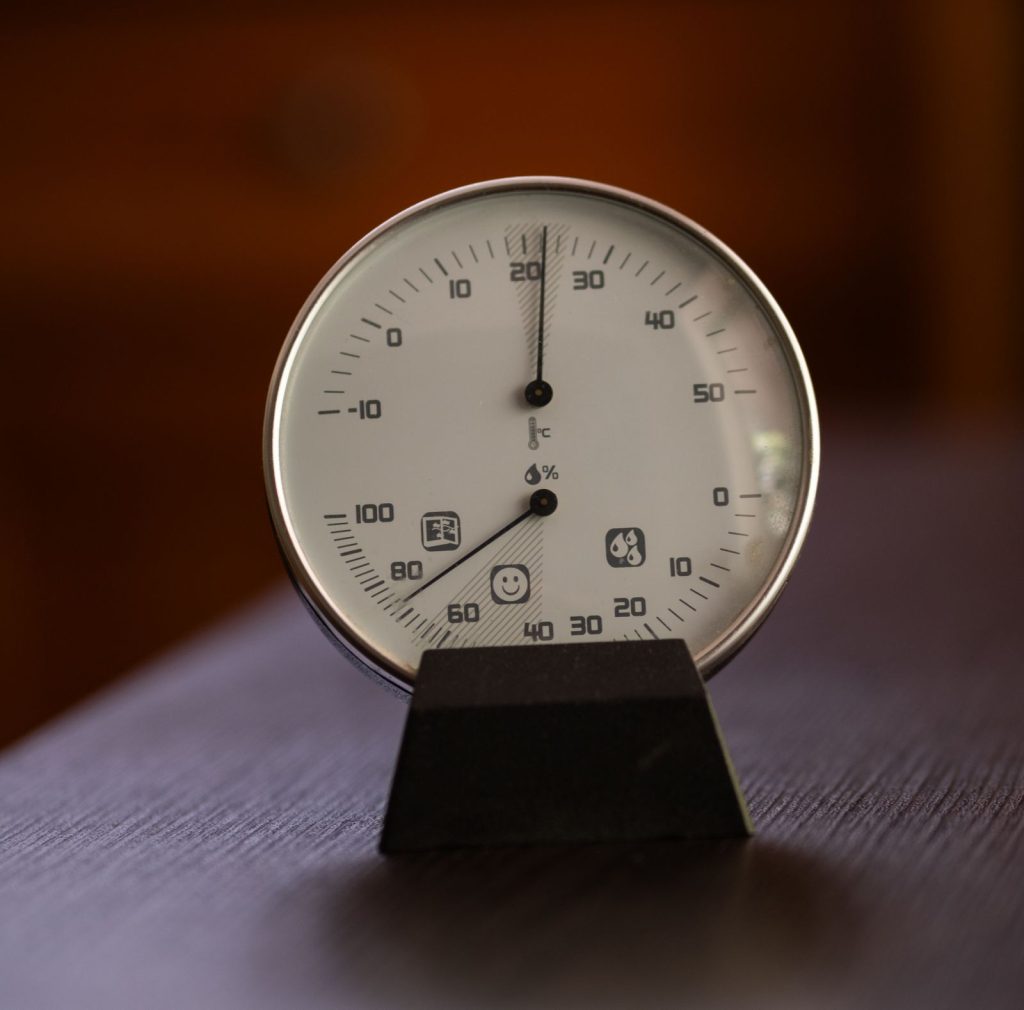
You need a hygrometer, also sold as a humidity gauge or indoor thermometer-hygrometer. The EPA notes that models showing both temperature and humidity are generally available for less than $50 at hardware stores. Digital models are easier to read than dial ones, and many record the day’s high and low.
- Place it well. Chest height, on an interior wall or shelf, away from windows, exterior doors, radiators, vents, kettles and direct sun.
- Let it settle. Give it an hour after moving it before you trust the reading.
- Measure several rooms. Bedroom, living area and basement can read quite differently. Move one meter around or buy two or three.
- Log for a week. Write down morning and evening readings with the outdoor weather. One reading right after a shower tells you little.
- Check its accuracy. Inexpensive meters can be off by a few points. If two meters side by side disagree a lot, trust the trend more than the exact number.
Technical note: a bathroom will read 80–90% for a while after a shower. That is normal and not what the recommended ranges refer to. What matters is how quickly it comes back down and what the rest of the house reads over a full day.
Signs your humidity is too high or too low
| Too high (often above 50–60%) | Too low (often below 30%) |
|---|---|
| Water on the inside of windows most mornings | Frequent static shocks |
| Musty smell, especially in basements and closets | Wood floors or furniture showing new gaps |
| Mold spots on walls, ceilings or window frames | Air that feels dry even at a comfortable temperature |
| Damp-feeling bedding and clothes | Readings below 30% on the hygrometer |
How to bring humidity into range
To lower it, the EPA recommends venting moisture-producing appliances such as clothes dryers outdoors, running bathroom and kitchen exhaust fans, and using air conditioners or dehumidifiers when needed. Opening windows helps when it is not humid outside.
To raise it, the EPA mentions a vaporizer or humidifier. If you use one, its guidance is to humidify no higher than 50%, empty and refill portable units daily, use low-mineral water such as distilled water, and clean the unit every third day, because microorganisms can grow in the tank.
Watch out: the most common mistake is a humidifier set high in a cold climate. If windows start sweating, the setting is too high for your windows, whatever the number says. Turn it down before condensation turns into mold on the frames.
If you have health concerns related to mold or indoor air, see the CDC’s mold information and talk to your doctor. This guide does not give medical advice.
Frequently asked questions
Is 60% humidity too high indoors?
It is at the top of what the EPA considers acceptable; the agency recommends staying below 60% and ideally between 30% and 50%. The CDC’s advice is no higher than 50%. Occasional readings of 60% are not a crisis, but a house that sits there day after day is at risk of mold.
What humidity should a bedroom be at night?
The same 30–50% range applies. Bedrooms often rise overnight because of breathing and closed doors; if windows sweat by morning, improve air flow or lower the humidity.
Are cheap hygrometers accurate?
Good enough to spot trends. They can be a few points off, so compare rooms and days with the same meter rather than chasing an exact number.
Why is my humidity high in summer even with the AC on?
Air conditioners remove moisture only while they run. An oversized unit that cools quickly and shuts off may leave the air humid. In that case, the EPA and ENERGY STAR guidance points to dehumidification when needed.
Sources
- U.S. EPA. Mold Course, Chapter 2: below 60%, ideally 30–50%; pests and dust mites; meters under $50.
- U.S. EPA. The Inside Story: A Guide to Indoor Air Quality: keep humidity between 30% and 50%.
- U.S. EPA. Use and Care of Home Humidifiers: not above 50%, cleaning and water.
- U.S. EPA. A Brief Guide to Mold, Moisture and Your Home: how to reduce humidity.
- CDC. About Mold: no higher than 50%.
- ENERGY STAR. Dehumidifiers: RH definition, 30–50%, 30–40% in the heating season.
Next step