Quick answer
Put the dehumidifier in the dampest space, with the doors and windows to that space closed, away from dust sources and, unless it blows air out the top, away from walls and furniture so air can circulate. If you’ll drain it with a hose, place it near a floor drain or sump. Set the humidistat within the range ENERGY STAR calls optimal, 30–50%, and toward 30–40% in the heating season in colder climates. Around 45–50% is a practical setting for most basements: dry enough to discourage mold, without wasting energy.
Which room?
A portable dehumidifier dries the air it can reach, so put it where the problem is: the basement that smells musty, the room where laundry dries, the bedroom with sweating windows. Measure humidity in a few rooms first; the one that reads highest over several days is usually the right place. A single portable unit won’t dry a whole house through closed doors. If two areas are damp, for example a basement and a laundry room on different floors, treat them separately or move the unit between them, rather than leaving doors open and hoping one unit covers both. For whole-house humidity problems in homes with central air, ENERGY STAR describes whole-home dehumidifiers that work through the ductwork, sized and installed by a professional.
| Space | Placement tip |
|---|---|
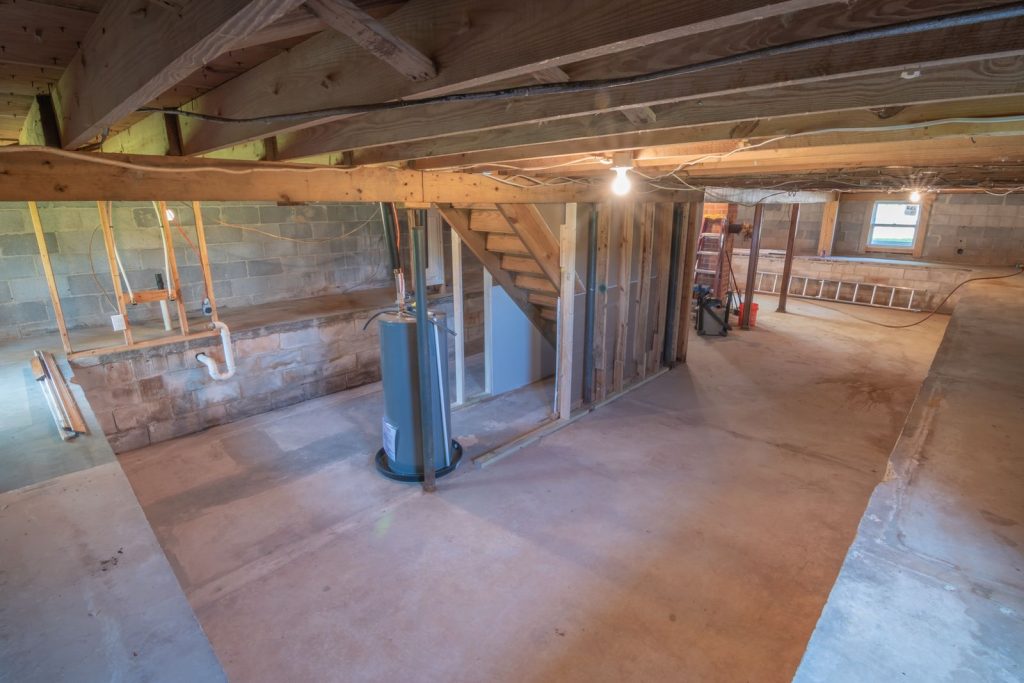
| Basement | Central spot, near a floor drain or sump for hose draining; keep the basement door closed |
| Crawl space access or utility area | Check temperature: below about 65 °F, frost can form on coils (ENERGY STAR) |
| Laundry room | Close the door while laundry dries; run the unit until humidity drops |
| Bedroom | Look at noise and night modes; keep it away from the bed and curtains |
| Open-plan areas | Expect less effect; the unit is effectively serving a larger space |
Placement rules from ENERGY STAR
- Air must circulate. Most portable dehumidifiers have top-mounted air discharge and can go against a wall. If yours doesn’t, keep it away from walls and furniture so air can move freely around it.
- Close doors and windows to the space while it runs, so it dehumidifies that space efficiently.
- Keep it away from dust and dirt, such as woodworking equipment, which can clog coils and grills.
- Plan drainage. If you use a hose, put the unit near the floor drain or sump to avoid a long hose, and don’t create a tripping hazard.
- Electrical safety. Use a properly grounded outlet, follow the manufacturer’s warnings, and keep drain hoses and water away from cords, connections and electrical devices.
ENERGY STAR also notes that the air right around the unit will feel slightly warmer: removing moisture releases a little heat. That’s normal.
Watch out: never run drainage near electrical circuits or devices, and check the manufacturer’s instructions before using an extension cord. In a basement that sometimes floods, raise the unit off the floor on a stable, level surface and keep the plug and cord out of reach of water.
What humidity to set
ENERGY STAR considers 30–50% relative humidity optimal and says anything above that may promote mold growth. In colder climates during the heating season, it suggests 30–40% to prevent window condensation. The EPA recommends keeping indoor humidity below 60%, ideally 30–50%, and the CDC advises no higher than 50%.
| Situation | Suggested humidistat setting |
|---|---|
| Damp basement, summer | About 45–50% |
| Heated rooms in a cold winter | About 30–40%, especially if windows sweat |
| Laundry drying room | About 45–50% while laundry dries |
| Anywhere | No lower than about 30%; lower wastes energy and can make air too dry |
Check the humidistat: built-in humidistats can be off by a few points. ENERGY STAR suggests that if your unit lacks a humidistat, or doesn’t display humidity, you buy a separate hygrometer and hang it near the dehumidifier. Doing that even with a built-in humidistat is a good accuracy check.
Worked example: setting up a basement
Assumed situation: a basement that reads 72% in July, with a floor drain near the laundry area and an open stairwell to the kitchen.
- Place the unit a short hose run from the floor drain, clear of walls if it doesn’t discharge upward.
- Close the basement door and windows.
- Set the humidistat to 50% and hang a hygrometer on the far wall.
- After a few days at 50% with no musty smell, try 45% and compare how often the unit runs.
Illustrative example with assumed conditions.
Troubleshooting: it runs, but humidity stays high
| Symptom | Likely cause | What to try |
|---|---|---|
| Runs nonstop, reading barely drops | Door open to the rest of the house, or unit too small | Close doors and windows; ENERGY STAR says it’s better to oversize than undersize |
| Compressor cycles on and off, little water collected | Frost on the coils in a cool room | ENERGY STAR advises switching it off to defrost; consider a low-temperature model below about 65 °F |
| Airflow feels weak | Dusty filter, coils or grills | Clean per the manual; keep the unit away from dust sources |
| Bucket fills daily in a “fixed” basement | Water still coming in | Check gutters, downspouts and grading |
| Display and hygrometer disagree | Humidistat inaccuracy | Trust a separate hygrometer placed away from the unit |
Simple upkeep
- Empty and rinse the bucket regularly, or check that the drain hose runs downhill without kinks.
- Clean the air filter as the manual directs; a clogged filter reduces airflow.
- Keep grills and coils free of dust, which ENERGY STAR notes can clog them.
- Check the cord and plug for damage and keep them away from water.
- Recheck the setting each season: lower in the heating season, around 45–50% in humid summer months.
Reduce the load first
ENERGY STAR points out that reducing moisture sources reduces the need for dehumidification. For basements, it suggests improving drainage around the foundation: extend downspouts away from the house, keep gutters and downspouts clear, and make sure soil slopes away from the foundation. Venting the dryer outdoors and running bath and kitchen fans, as the EPA recommends, helps the rest of the house.
Frequently asked questions
Can a dehumidifier go against a wall?
If it has top-mounted air discharge, ENERGY STAR says it can. Otherwise, keep it away from walls and furniture so air circulates.
Should the door be open or closed?
Closed. ENERGY STAR advises closing doors and windows to the space so it’s dehumidified efficiently.
Is 60% a good dehumidifier setting?
It’s at the top of the EPA’s acceptable range. ENERGY STAR’s optimal range is 30–50%, so 45–50% is a safer target against mold.
Can I use a dehumidifier in a cold garage?
Standard units struggle below about 65 °F because frost forms on the coils. ENERGY STAR suggests a model specified for lower temperatures.
Sources
- ENERGY STAR. Dehumidifiers: placement, electrical safety, drainage, humidity range, humidistats, low temperatures, reducing moisture sources.
- U.S. EPA. A Brief Guide to Mold, Moisture and Your Home.
- CDC. About Mold.
Next step