Quick answer
Mildew vs. mold is not a contest between two different organisms: the EPA says mildew refers to certain kinds of mold, and that the word is often used for mold growth with a flat growth habit. In a home, the useful difference is depth. Flat growth on a hard surface such as tile, glass or a painted sill usually wipes off with detergent and water. Growth that has gone into drywall, wood, carpet or fabric, keeps coming back or covers a large area is a moisture problem to fix, whatever you call it.
One family, two everyday words
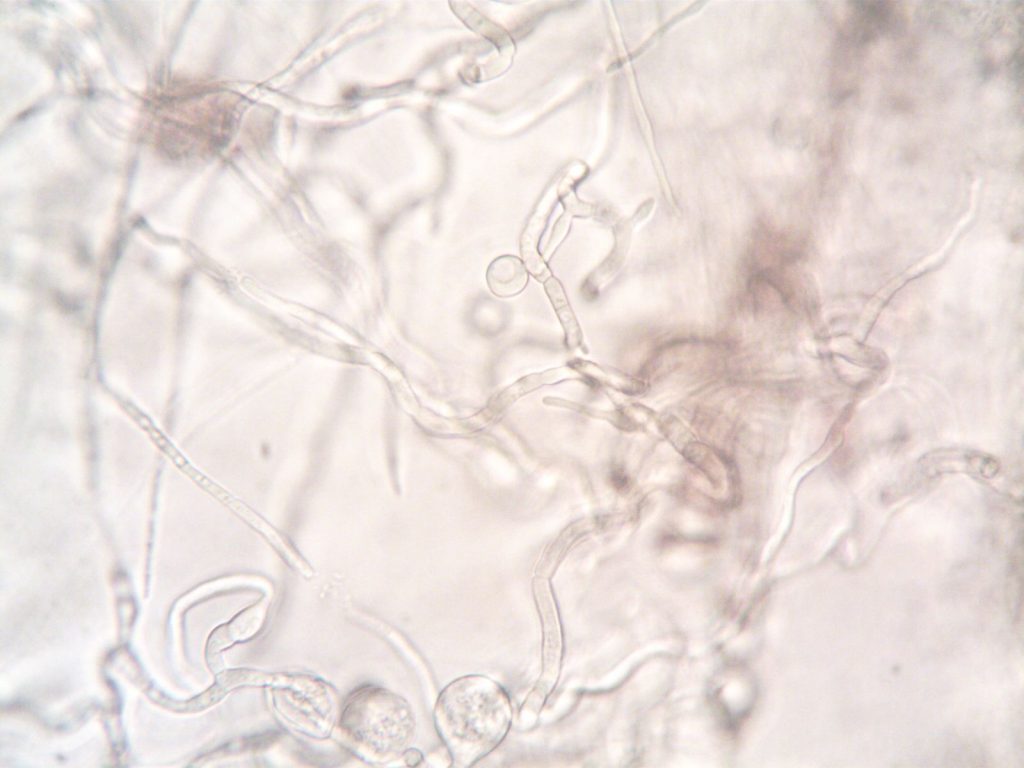
Molds are fungi. The EPA describes them as all species of microscopic fungi that grow in the form of multicellular filaments called hyphae, the threads in the photo above. They can live on almost any organic material: clothing, leather, paper, and the ceilings, walls and floors of homes with moisture problems.
“Mildew” is not a separate category next to that. In the EPA’s words, mildew refers to certain kinds of mold or fungus, and the term is often used generically for mold growth that is flat. The EPA adds that mildew often lives on shower walls, windowsills and other places where moisture levels are high. The University of Missouri Extension uses the word the same way: a thin, black or sometimes white growth produced by mold, which leaves a musty odor.
So when someone says “it’s just mildew,” they usually mean a thin film on a surface. When they say “mold,” they often mean something fuzzier, thicker or more worrying. Those are habits of speech, not lab categories, and the CDC adds that you do not need to know the type of mold you have: the cleanup is the same.
Technical note: the mildew on plants is something else. The white, powdery coating on houseplant or garden leaves is powdery mildew, a plant disease. The University of Minnesota Extension says it affects over 10,000 kinds of plants and that the fungus takes its nutrients from living plant tissue. It is a gardening problem, not a sign that your walls are damp. This article is about growth on household surfaces.
Mildew vs. mold side by side
The table sets out how the two words are normally used around the house and what each case means for cleanup. The cleanup column follows the EPA’s rule for hard versus porous materials.
| What to look at | What people usually call “mildew” | What people usually call “mold” |
|---|---|---|
| What it is | Mold growing flat on a surface | Mold of any kind, often thicker or fuzzy |
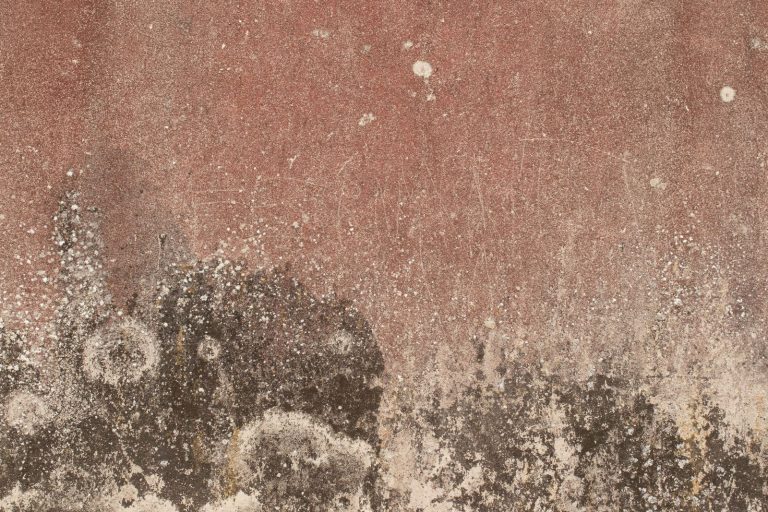
| How it looks | Thin film or fine spots, gray, white or black | Spots or patches of many colors (black, green, white, orange…), sometimes raised |
| Typical places | Shower walls, grout, windowsills, damp fabrics | Drywall, wood, ceiling tiles, carpet, behind furniture, after leaks or floods |
| The material underneath | Usually hard and non-absorbent: tile, glass, sealed paint, plastic | Often absorbent or porous: drywall paper, bare wood, insulation, fabric |
| After cleaning | The surface looks clean once scrubbed and dried | Stains remain, or the material is soft, swollen or crumbly |
| What it usually needs | Scrub with detergent and water, dry completely, reduce moisture | Find and fix the water source; porous materials may have to be removed |
Color does not settle the question. The CDC says mold can look like spots of many different colors, and white or gray growth can be just as deep as black. What tells you more is the material it sits on and whether it comes off.
When “it’s just mildew” is a fair call
Flat growth on a hard surface is the easy case. The EPA says to scrub mold off hard surfaces with detergent and water and dry them completely. You can treat it as surface mildew when all of these are true:
Surface growth: all boxes ticked
- It sits on tile, glass, glazed porcelain, plastic, metal or a sealed, painted surface in good condition.
- It comes off when you wipe a test spot with detergent and water, and the surface underneath is firm.
- It is in an obviously damp spot with a known cause: the shower, a sill where window condensation runs down, a bathroom without enough ventilation.
- The area is small. The EPA says that if the moldy area is less than about 10 square feet, in most cases you can handle the job yourself.
- No musty smell remains once the area is clean and dry.
Even then, cleaning is only half the job. Mildew on a windowsill or in a shower grows back as long as the surface stays wet for hours every day. Our guides to black mold in the shower and cleaning small areas of mold safely cover the method and the protection: gloves, eye protection and, as the EPA suggests, an N-95 respirator.
Signs it is more than surface mildew
Whatever name it gets, growth needs a different response when it has gone into the material or when the moisture behind it is still there. Treat it as a mold problem to investigate if you see any of these:
- Porous material. Drywall paper, bare wood, ceiling tiles, carpet, upholstery or insulation. The EPA says absorbent or porous materials may have to be thrown away if they become moldy, because mold can grow into their gaps and be hard or impossible to remove.
- Stains that stay. The spots fade but do not disappear after scrubbing, or paint bubbles and peels around them.
- Soft or swollen material under the growth, or a patch that spreads outward from a corner, a pipe or a ceiling.
- It returns within days or weeks in the same place, even after a thorough clean.
- A musty smell that stays after you clean and dry everything you can see.
- Size or water damage. More than about 10 square feet, or growth after a leak or flood. The EPA points these cases to its guidance for larger cleanups, and suggests an experienced professional when there has been a lot of water damage.
One more rule applies to both: the EPA says not to paint or caulk over moldy surfaces. Clean and dry them first, or paint over the growth is likely to peel and the mold stays underneath.
Two spots, two answers
Two everyday cases show why the material and the moisture source decide more than the name.
Example: windowsill vs. closet wall
Spot A: gray-black speckles along a vinyl window frame and a painted wooden sill, in a bedroom where the glass is wet most winter mornings. The patch is about 3 ft long and 2 inches wide.
Spot B: pale gray, slightly fuzzy patches on the drywall inside a closet on an exterior wall, behind hanging clothes. About 2 ft by 2 ft, and the wall feels cold.
- Size: A is 3 × 0.17 ≈ 0.5 sq ft; B is 2 × 2 = 4 sq ft. Both are under the EPA’s 10 sq ft.
- Material: A is non-porous vinyl and sealed paint. B is drywall, which is porous.
- Test wipe: on A the speckles come off and the paint is intact. On B a gray shadow stays in the paper.
- Answer for A: surface mildew. Scrub, dry, and deal with the condensation: lower indoor humidity and wipe the glass in the morning.
- Answer for B: mold in a porous material on a cold surface. Find out why that wall stays damp (cold spot, missing insulation, a leak), move the clothes away from the wall and let air reach it; if the drywall stays stained or soft, it may need to be cut out and replaced by someone who can also check the wall cavity.
Example with assumed situations and measurements. The 10 square foot guide and the hard versus porous rule come from the EPA.
Spot B is the typical “mildew in the closet” that turns out to be a cold-wall problem. Our article on condensation on walls in winter explains why outside walls and corners stay damp, and mold on bedroom walls covers the cleanup and when to call a pro.
Mildew on clothes, towels and stored fabrics
Fabric is where the word “mildew” is used most, and where it does real damage. The University of Missouri Extension says the molds that cause mildew grow where it is damp, warm, poorly lit or where air does not circulate, often in humid summer weather in closed houses, and that they can eat into fabrics until they rot. Its home methods are simple:
- Act early. Remove mildew spots as soon as you find them, before they set.
- Wash at once with soap or detergent and water, following the care label.
- Sun and air the fabric thoroughly, so it dries completely.
- For stains that remain on bleach-safe fabrics, the Extension gives a solution of 2 tablespoons of liquid chlorine bleach per quart of warm water, and warns never to use chlorine bleach on silk, wool or spandex. Never mix bleach with ammonia or other cleaners.
To prevent it, the same publication says to keep fabrics dry and never leave clothing lying around damp or wet. In practice: hang towels open after use, do not put damp laundry in a hamper or a closet, and leave space between hanging clothes on an outside wall. If your laundry dries indoors, how much moisture drying clothes indoors adds helps you plan where and how.
What stops both: drier air and drier surfaces
Since mildew and mold are the same kind of organism, they are prevented the same way: take away the moisture. The EPA’s key numbers are these:
- Indoor humidity below 60 percent, ideally between 30 and 50 percent (EPA). The CDC advises no higher than 50 percent. Our guide to healthy indoor humidity shows how to measure it.
- Dry wet materials within 24 to 48 hours after a spill or leak; the EPA says mold often will not grow if they dry in that time.
- Vent moisture at the source: bathroom and kitchen exhaust fans that discharge outdoors, and a dryer vented outside.
- Let air reach cold surfaces: furniture a few inches off outside walls, closet doors open now and then.
Where humidity stays high, for example in a basement in summer, a dehumidifier can keep it down. It will not remove growth that is already there; our article on what a dehumidifier can and can’t do against mold explains the limits.
Health questions go to a doctor. Calling growth “mildew” does not make it harmless for everyone. If you have asthma, allergies, a lung condition or a weakened immune system, or if symptoms seem linked to your home, talk to a health professional and read the CDC’s information on mold. Our summary of what health agencies say about household mold goes further.
Sources
- U.S. EPA. What is the difference between mold and mildew?: definitions, flat growth, typical places.
- U.S. EPA. A Brief Guide to Mold, Moisture and Your Home: hard versus porous materials, 10 sq ft, 24–48 hours, humidity, painting, protection.
- CDC. About Mold: colors, musty smell, no need to identify the type, humidity.
- University of Missouri Extension. How to Prevent and Remove Mildew — Home Methods (GH5928, reviewed 2017): mildew on fabrics, prevention, bleach solution.
- University of Minnesota Extension. Powdery mildew in the flower garden: powdery mildew as a plant disease.
Next step
Once you know what you’re looking at
Cleanup
Clean small areas of mold safely
Protection, method and drying for patches you can handle yourself.
Humidity
Lower the humidity at home
Quick fixes and lasting ones, so neither mildew nor mold comes back.