Quick answer
All the water left in a load of laundry after the spin cycle evaporates into your home’s air when you dry it indoors: every pound of water becomes a pint of moisture. That can push humidity above the EPA’s recommended range (below 60%, ideally 30–50%) and cause condensation and mold, especially in small, cool rooms. If you dry indoors, use the highest spin speed, hang laundry in one room with the door closed and a window open or an exhaust fan running, or run a dehumidifier in that room. ENERGY STAR even lists laundry drying as a “wet” condition when sizing dehumidifiers.
Where the water goes
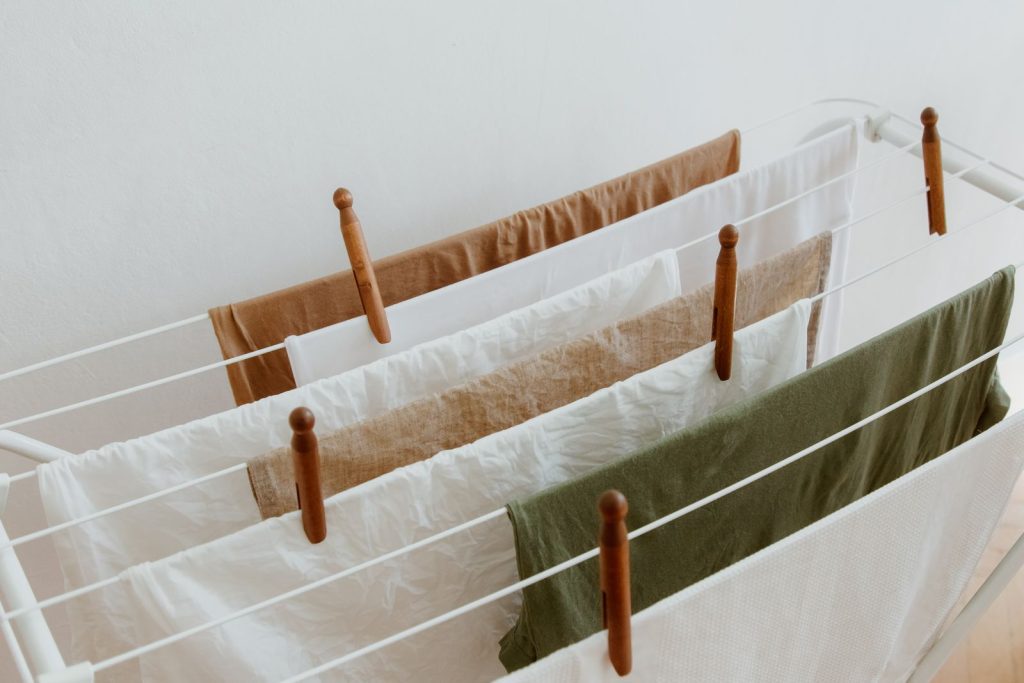
Clothes coming out of the washer are still wet: the spin cycle removes a lot of water, but not all of it. On a rack, that water evaporates into the room until the clothes are dry. Unlike a vented dryer, which blows moist air outdoors, or a heat pump dryer, which ENERGY STAR explains condenses the moisture and drains it away, a drying rack releases every drop into the house.
The EPA lists moisture-generating appliances such as clothes dryers among the things that raise indoor humidity, and recommends venting dryers outdoors; a rack indoors has no vent at all. ENERGY STAR’s dehumidifier sizing chart puts spaces with “high-load conditions such as laundry drying” in its wettest category.
How much moisture? Weigh your laundry
The amount depends on the fabric, the load size and your washer’s spin speed, so the most reliable number is your own. A bathroom scale gives it to you:
- Weigh the laundry basket with the wet load right out of the washer.
- Weigh the same load in the basket when it’s dry.
- The difference is the water that went into your air. 1 pound of water ≈ 1 U.S. pint ≈ 0.45 liters.
Worked example
Assumed measurements: a load weighs 14 lb wet and 9 lb dry (basket weight subtracted). The household dries 4 loads a week on racks indoors.
- Water per load: 14 − 9 = 5 lb ≈ 5 pints ≈ 2.3 liters.
- Per week: 4 × 5 = 20 pints ≈ 9 liters released indoors.
- For comparison, ENERGY STAR’s smallest recommended dehumidifier range starts at 20 pints/day for a slightly damp space, rated under test conditions.
Illustrative example with assumed weights. Weigh your own loads for a real figure.
Over a year, it adds up
Virginia Cooperative Extension notes that the typical household does nearly 400 loads of laundry a year. Not all of them are dried indoors, but the scale matters. Using the same assumed 5 pints per load from the example above, drying even a quarter of those loads on indoor racks would release roughly 100 loads × 5 pints = 500 pints, or about 240 liters of water, into the house over a year. Most of that happens in fall and winter, when windows are closed, walls are coldest and condensation is most likely.
The same extension publication suggests avoiding putting the washer and dryer in heated or air-conditioned spaces where possible, since the heat and moisture they produce make heating and cooling systems work harder. If your laundry area is inside the living space, good venting matters even more.
When indoor drying causes problems
| Situation | Risk | Why |
|---|---|---|
| Small bedroom, door closed, window shut | High | Moisture concentrates; cold walls and window reach the dew point |
| Cool basement without dehumidifier | High | Cool air holds less water; slow drying, damp walls |
| Living room in winter, windows sweating already | Medium to high | Adds to an existing humidity problem |
| Laundry room with exhaust fan or open window, door closed | Lower | Moisture removed at the source |
| Room with a dehumidifier running | Lower | Water collected in the bucket instead of the walls |
Watch for the signs of excess humidity: condensation on windows and cold surfaces, which the EPA calls a sign of high humidity, plus musty odors and mold spots. If they appear on drying days, the laundry is a likely cause.
How to dry clothes indoors without the damp
Indoor drying checklist
- Spin at the highest safe speed for the fabric: less water in the clothes means less in the air and faster drying.
- Pick one room, ideally a laundry room or bathroom with an exhaust fan, and close the door so the moisture doesn’t spread.
- Remove the moisture: run the exhaust fan, open a window a little if outdoor air is cool or dry, or run a dehumidifier in the room.
- Keep air moving with a fan so clothes dry faster.
- Space the items out and keep the rack away from cold exterior walls and windows.
- Avoid bedrooms, especially overnight.
- Dry outdoors whenever the weather allows.
Dehumidifier drying: in a closed room, a dehumidifier collects much of the laundry’s water in its bucket and speeds up drying. It uses electricity, but so does a dryer. If you use one, set the humidistat around the EPA’s 30–50% target and empty or drain the bucket.
What about clothes dryers?
A conventional dryer vented outdoors removes the moisture from the house, which is why the EPA recommends venting clothes dryers to the outside, never into the garage, attic or living space. ENERGY STAR notes that heat pump dryers work as a closed loop: they condense the moisture and drain it or collect it in a tank, rather than releasing moist air, and use around 70% less energy than conventional dryers. Dryers with moisture sensors avoid over-drying.
Watch out: a dryer venting into the house, or a disconnected or crushed dryer duct, dumps both heat and moisture indoors. Check that the duct is connected and that the outdoor flap opens when the dryer runs. Clean the lint filter every load.
Frequently asked questions
Is it bad to dry clothes indoors?
Not if you manage the moisture. The problem is the water released into the air; with ventilation or a dehumidifier in the drying room, it’s usually fine.
Can drying clothes indoors cause mold?
It can contribute. Extra moisture raises humidity and condenses on cold surfaces; the EPA links high humidity and condensation to mold growth.
Is it OK to dry clothes on a radiator?
Drying is faster, but the moisture still goes into the room, and covering a radiator reduces the heat reaching the room and cold walls. Use a rack near, not on, the heat, and ventilate.
How can I tell if laundry is causing my condensation?
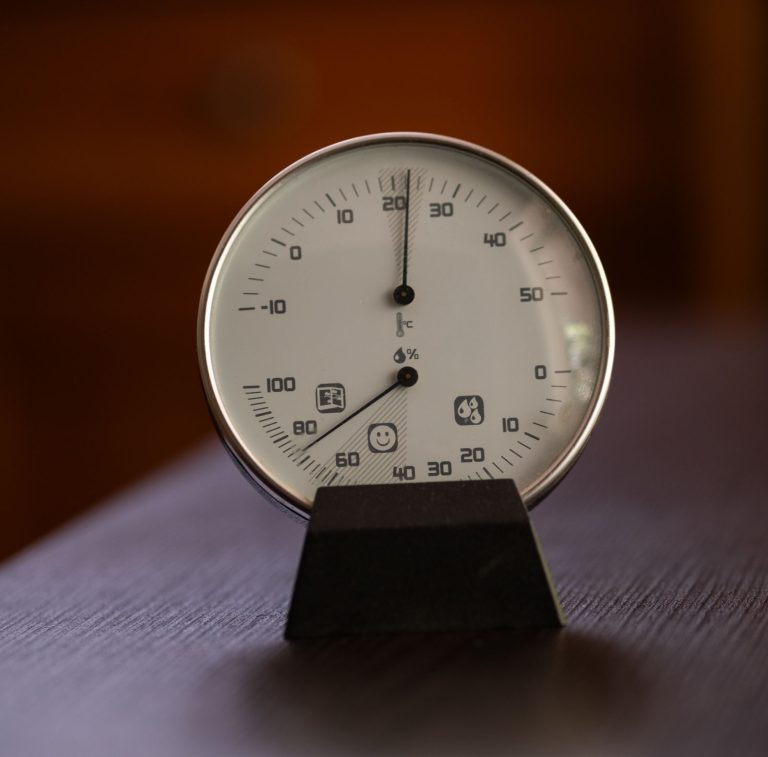
Track humidity with a hygrometer on drying days and non-drying days. A clear jump on drying days, or windows sweating mainly then, points to the laundry.
Sources
- U.S. EPA. What are the main ways to control moisture in your home?: vent dryers outside.
- U.S. EPA. A Brief Guide to Mold, Moisture and Your Home: humidity targets, condensation, venting appliances.
- ENERGY STAR. Dehumidifiers: laundry drying as a wet condition, sizing.
- ENERGY STAR. Clothes Dryers: heat pump dryers.
- Virginia Cooperative Extension. Energy Series: What about the Laundry Area?: laundry location, dryer sensors.
Next step