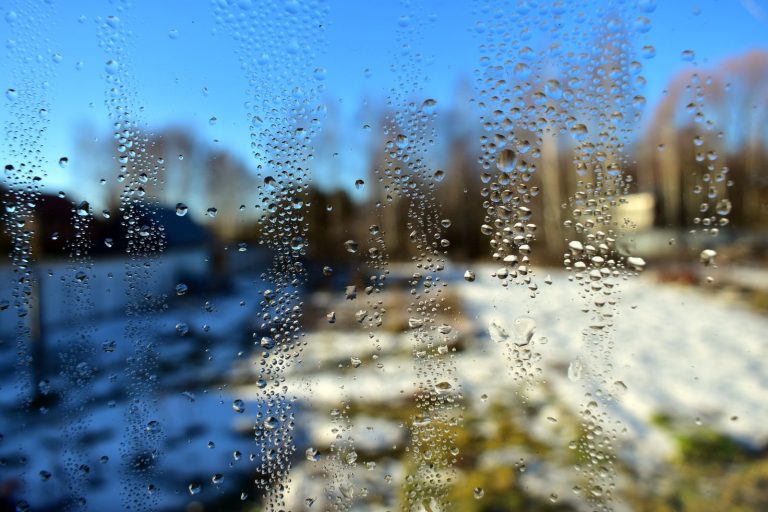

Quick answer
Condensation between window panes means the seal of the insulated glass unit (the sealed double- or triple-pane “sandwich”) has failed and moist air has got into the space between the layers of glass. Lowering your indoor humidity or wiping the glass will not clear it. Your options are to replace the glass unit only, replace the sash, replace the whole window, or live with the fog for now. Check the window warranty first: some cover the glass unit, so a claim may cost you less than a repair.
Why fog appears between the panes
Most modern windows use insulated glazing: in the U.S. Department of Energy’s words, two or more panes of glass spaced apart and sealed, leaving an insulating air space. Many manufacturers fill that space with argon or krypton, which resists heat flow better than air.
The spacer (the strip that holds the panes apart) and the edge seal keep that space closed. The Efficient Windows Collaborative notes that spacer systems seal the space between the panes to avoid fogging.
When the seal fails, air carrying water vapor gets in and condenses on the inner faces of the glass as haze, droplets or streaks. The Building America Solution Center, a Department of Energy resource run by Pacific Northwest National Laboratory, identifies seal failure by exactly this sign: condensation or “fogging” between the two layers of glass. It adds that failure is commonly a result of the seals sitting in contact with water for long periods.
Technical note: the fog often comes and goes with the temperature of the glass, heavy on cool mornings and fainter in the afternoon. That does not mean the window is healing.
Inside, outside or between: how to tell
Before you call anyone, make sure the moisture really is trapped inside the glass unit.
Five-minute diagnosis
- Wipe the room side of the glass with a dry cloth. If the fog comes off, it is inside condensation.
- Wipe the outside face, if you can reach it safely. If the fog comes off there, it is outside condensation.
- If the haze stays after wiping both faces, it is between the panes.
- Look for a whitish film, streaks or mineral spots that stay when the glass is dry: they point to a unit that has been leaking for a while.
- Check the frame and sill for standing water, peeling paint or soft wood. Water sitting against the seal is a common cause of failure.
- Note which windows are affected and when they were installed. You will need this for the warranty.
| Where the moisture is | What it usually means | What helps |
|---|---|---|
| Room side of the glass | Indoor air is humid for how cold the glass gets | Lower indoor humidity, move air, keep the glass warmer |
| Between the panes | The edge seal of the insulated glass unit has failed | Repair or replace the glass unit, sash or window; humidity changes do not help |
| Outdoor side of the glass | Outdoor air is humid and the outer pane is cool, often on clear mornings | Nothing; it clears as the day warms |
It is not a room humidity problem
Water on the room side of the glass is a humidity problem: indoor air reaches its dew point on a cold surface, and the cure is to bring humidity down and warm the glass. See our guide to condensation on the inside of windows.
Fog between the panes is sealed off from your room, so a dehumidifier, fans or opening windows will not reach it. If every window in the house fogs on the inside surface, look at humidity. If one or two windows fog inside the glass while the others stay clear, look at those units.
Your indoor humidity still matters for the rest of the house. The EPA recommends keeping it below 60%, ideally between 30% and 50%, and notes that condensation on windows, walls or pipes can be a sign of high humidity. See our page on the ideal indoor humidity level.
What a failed seal changes, and what it doesn’t
The obvious effect is a cloudy view. Official sources give no figure for the energy loss of a failed seal, so treat numbers you see online with caution. What the sources do support:
- Gas fills matter. Argon or krypton insulates better than air (DOE). In a gas-filled unit with an open seal, some gas has likely been replaced by air; how much varies.
- Some gas loss is normal. The Efficient Windows Collaborative puts leakage from an efficient window at about 0.5% of the gas fill per year, still about 90% of original performance after 20 years. That describes an intact window, not a failed one.
- The gases are not a hazard. The same source notes they are non-toxic.
- The trapped water stays in the unit. Water pooling on the sill or frame is a separate issue that does need attention, since wet frames can rot.
In short: a fogged unit is mostly a visibility problem with some hard-to-quantify loss of insulation, not an emergency.
Your options: glass, sash or whole window
Which option makes sense depends mostly on the condition of the frame and sash (the movable part that holds the glass), not on the fog itself.
| Option | What is replaced | When it fits | Watch for |
|---|---|---|---|
| Replace the glass unit only | The sealed glass “sandwich”; frame and sash stay | Frame and sash are sound, window works well, only one or a few units are fogged | The new unit must fit the existing glazing pocket, sit on setting blocks and drain to the outside |
| Replace the sash | The movable sash with new glass; the frame stays | Sash is worn or cannot take a modern insulated unit, but the frame is in good shape and you want to keep the look | Not every window type has a replaceable sash |
| Replace the whole window | Frame, sash and glass | Frames are rotten or leaking, windows are drafty or don’t open, or many units are failing | Installation quality matters as much as the product; check NFRC ratings for your climate |
| “Defogging” service | Nothing; the unit is cleaned and vented in place | You mainly want a clearer view and accept the limits | Does not restore the original seal or gas fill; ask what is guaranteed |
| Leave it for now | Nothing | Fog is mild, the window is due for replacement anyway | Keep the frame dry and check for water on the sill |
The Building America Solution Center describes sash replacement as a good option when you want to keep the original appearance but the existing sashes cannot take new insulated glass units or are in poor condition. Severely deteriorated sashes point toward sash, insert or full window replacement.
About “defogging” services. Some companies clear fogged glass in place, typically by drilling small holes, cleaning and drying the space, and fitting vents. We found no official U.S. source that evaluates them. They do not rebuild the factory seal or put back escaped gas. Ask in writing what is guaranteed, for how long, and whether it voids any remaining warranty.
Check the warranty before you pay
Some window warranties cover the insulated glass unit, sometimes on different terms from the frame or hardware. Terms vary, so read yours rather than assuming. These steps help:
- Find the paperwork. Look for the purchase or installation invoice, the warranty document and the house closing papers if the windows came with the home.
- Identify the window. Look for a name, code or date etched into a corner of the glass or printed on the spacer bar. Photograph it, along with any NFRC label still on the frame.
- Photograph the fog. Take pictures on a morning when it is clearly visible, and note the date.
- Ask what is covered. Glass only, or labor too? Is the warranty transferable to a new owner? Do you have to use an authorized installer?
- Get the answer in writing before you hire anyone, especially before any defogging work.
Before you order new glass or windows
New glass will be there for decades, so get the performance right.
- Read the NFRC label. The National Fenestration Rating Council rates U-factor (how well a product keeps heat from escaping; the lower, the better), Solar Heat Gain Coefficient (how much solar heat it lets in) and, optionally, Condensation Resistance (the higher, the better).
- Match your climate. ENERGY STAR splits the country into climate zones: the Northern Zone focuses on insulation for heating, the Southern Zone on blocking solar heat, and the central zones balance both.
- Ask about spacers and gas. The Building America Solution Center calls traditional aluminum spacers the weak thermal link in most double-glazed units; “warm-edge” spacers reduce heat loss at the edge of the glass.
- Check local code. Under the energy code (IECC), replacement windows, including replacement sash and glazing, generally must meet the code’s U-factor and SHGC values, with some exceptions. Your local building department has the final word.
- Older homes and lead paint. The DOE warns that most homes built before 1978 contain lead paint. The EPA requires contractors paid to disturb painted surfaces in pre-1978 homes to be certified in lead-safe work practices.
Watch out: the DOE notes that even the most energy-efficient windows can cause drafts and moisture condensation if they are not properly installed. If water collects around the frame, fix the drainage at the same time, or the new unit will sit in the same wet conditions.
Frequently asked questions
Can I fix condensation between window panes myself?
Not in a lasting way: the seal is made at the factory. You can diagnose the problem, check the warranty and keep the frame dry; replacing a glass unit or sash is usually a job for a glazier or window installer.
Will a dehumidifier stop fog between the panes?
No. The moisture is inside a sealed space that room air cannot reach. A dehumidifier helps with condensation on the room side of the glass; see how to lower humidity in your house if that is your problem.
Do I have to replace the whole window?
Often not. If the frame and sash are sound, replacing just the glass unit is usually possible. Sash or full replacement makes more sense when the sash or frame is deteriorated, drafty or leaking, or when many windows are failing at once.
Is a fogged window dangerous?
The fog itself is not, and fill gases are non-toxic, according to the Efficient Windows Collaborative. Cracked glass, a rotting frame or a sash that no longer opens where the window is an emergency exit should be repaired.
Sources
- Building America Solution Center (U.S. DOE / PNNL). Window Sash Retrofit: fogging as the sign of seal failure, causes, warm-edge spacers.
- Building America Solution Center. Window Sash Replacement: when sash replacement fits.
- Building America Solution Center. Window and Frame Replacement: Code Compliance Brief: IECC rules for replacement units.
- U.S. DOE, Building Energy Codes. Types of Windows: insulated glazing and gas fills.
- U.S. DOE Energy Saver. Consumer Guide to Energy-Efficient Windows: installation quality, lead paint.
- Efficient Windows Collaborative. Gas Fills and Spacers: gas leakage, spacers.
- National Fenestration Rating Council. NFRC label ratings: label ratings.
- ENERGY STAR (U.S. EPA). ENERGY STAR Certified Windows fact sheet: climate zones.
- U.S. EPA. A Brief Guide to Mold, Moisture and Your Home: humidity targets.
- U.S. EPA. Lead Renovation, Repair and Painting Program: pre-1978 homes.
Next step
If the glass fogs on the inside instead
Condensation
Water on the room side of the glass
Why windows sweat on the inside and the steps that stop it.