Quick answer
Condensation on the inside of windows means warm, humid indoor air is touching glass that is colder than its dew point. The fix is to attack both sides of that equation: bring indoor humidity down (the EPA suggests below 60%, ideally 30–50%), move moisture out at the source with exhaust fans, and keep the glass warmer by letting heat reach it. A little fog on very cold mornings is common; water that runs onto the sill every day is a sign that humidity is too high for your windows.
Why windows sweat on the inside
Air always holds some water vapor. The warmer the air, the more vapor it can hold. When that air touches a surface that is cold enough, it can no longer hold all of its moisture, and the excess turns into droplets. The temperature at which this happens is called the dew point. The EPA describes it with a familiar example: take a cold bottle out of the refrigerator on a hot day and water forms on the outside of the bottle.
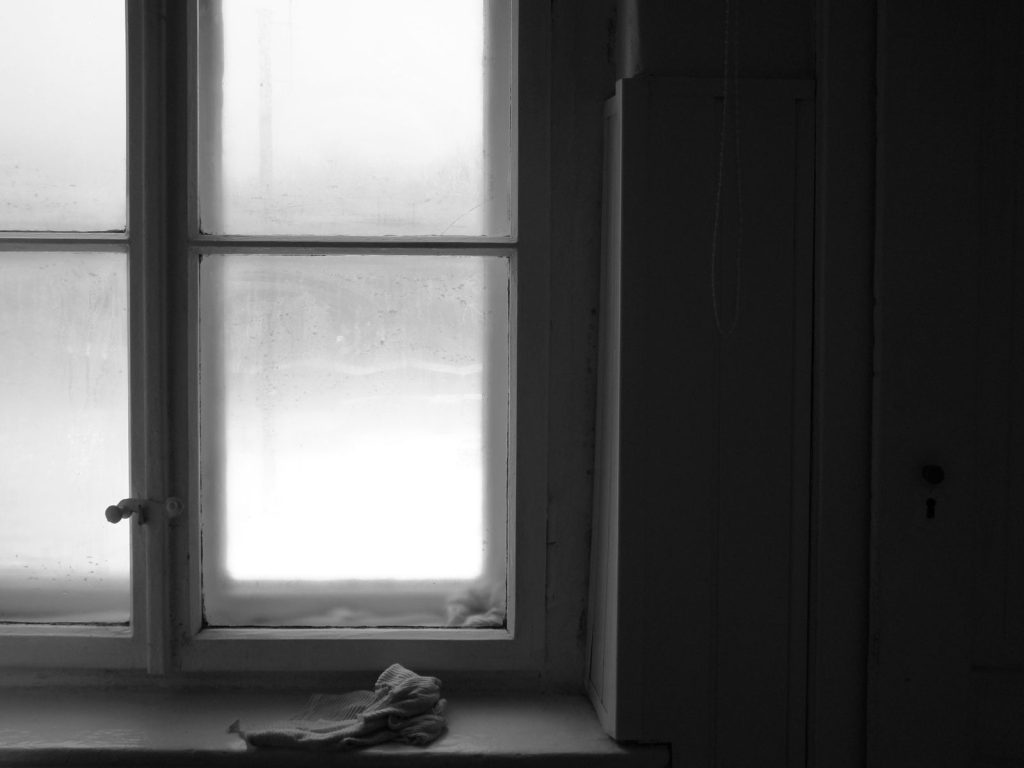
In winter, the window is the cold bottle. Glass is usually the coldest surface in a heated room, especially at the bottom edge and corners, where cold air settles and the frame conducts heat outside. That is why condensation almost always starts low on the pane and along the edges.
Two things decide whether you get water on the glass: how humid the indoor air is, and how cold the inner surface of the glass gets. Your home adds moisture through showers, cooking, breathing, drying laundry and houseplants. The outdoor temperature, the type of window and whether curtains trap cold air against the pane decide how cold the glass gets.
Worked example
Starting point: a room kept at 70 °F (21 °C). The table shows the dew point for different indoor humidity levels. If the inside surface of the glass drops below that temperature, water forms on it.
| Indoor relative humidity at 70 °F | Dew point (glass must stay warmer than this) |
|---|---|
| 30% | about 37 °F (3 °C) |
| 40% | about 45 °F (7 °C) |
| 50% | about 50 °F (10 °C) |
| 60% | about 55 °F (13 °C) |
Reading it: going from 50% to 40% humidity lowers the dew point by roughly 5 °F. On a single-pane or older window whose inner surface sits in the high 40s on a cold night, that difference can decide whether the glass stays dry or runs with water.
Inside, outside or between the panes: what it means
Where the water sits tells you what kind of problem you have. Check with a fingertip: if you can wipe it away from the room side, it is inside condensation.
| Where you see it | What it usually means | What to do |
|---|---|---|
| Inside surface (room side) | Indoor air is humid for how cold the glass gets | Lower humidity, improve air flow, keep glass warmer (this article) |
| Between the panes of a double- or triple-pane unit | The seal of the insulated glass unit has failed | Humidity changes will not fix it; the glass unit or sash needs repair or replacement |
| Outside surface (outdoor side) | Outdoor air is humid and the outer pane is cool, often on clear mornings | Nothing; it is not an indoor moisture problem and it clears as the day warms |
The Building America Solution Center, a U.S. Department of Energy resource run by Pacific Northwest National Laboratory, notes that insulated glass unit seal failure shows up as condensation or “fogging” in the space between the two layers of glass, and that it is commonly caused by the seals sitting in contact with water for long periods. Wiping or ventilating will not clear it.
The usual moisture sources in a home
Before buying anything, find out where the extra moisture is coming from. The EPA lists these everyday sources and how to handle them:
- Showers and baths: run the bathroom fan or open the window while showering.
- Cooking and dishwashing: use the range hood or another exhaust fan, or open a window.
- Clothes dryers: vent them to the outside, not into the garage, attic or living space.
- Unvented combustion heaters: kerosene heaters and similar appliances release water vapor and raise humidity unless they are vented outside.
- Leaks and wet areas: a plumbing leak, a damp basement or water entering around the foundation keep feeding moisture into the air.
Other common contributors are drying laundry on racks indoors, many houseplants in one room, aquariums, and a humidifier set too high. Bedrooms often show the worst window condensation in the morning: a closed door, a few people breathing all night and a cold window add up.
How to stop condensation on the inside of windows
Work through these steps in order. The first ones cost little or nothing and solve most cases.
- Measure humidity. A digital hygrometer tells you whether the air is actually humid. The EPA notes that these meters are small and inexpensive, and recommends keeping indoor humidity below 60%, ideally between 30% and 50%. The CDC’s advice for mold prevention is to keep it no higher than 50%.
- Remove moisture at the source. Run bath and kitchen exhaust fans while showering and cooking, and for a while afterward. Make sure the dryer vent goes outdoors and is not blocked.
- Let air reach the glass. Open blinds and curtains during the day, and leave a gap at night. Heavy curtains trap a pocket of cold air against the pane. Don’t block heating registers under windows with furniture.
- Move air. The EPA suggests increasing ventilation or air movement by opening doors and windows when practical and using fans as needed. Keeping interior doors open helps drier air mix into bedrooms.
- Keep rooms evenly warm. The EPA also lists raising the air temperature as a way to prevent condensation. A very cold spare room with its door closed will collect moisture from the rest of the house.
- Dehumidify if the numbers stay high. If humidity stays above your target after these steps, the EPA recommends air conditioners and dehumidifiers when needed. In winter, a dehumidifier in the dampest room is usually the practical option.
- Turn down the humidifier. If you use one, lower its setting in cold weather. Condensation on windows is one of the easiest signs that it is set too high.
Technical note: in very cold weather the right humidity target is lower than in mild weather, because the glass gets colder. If your windows still sweat at 40–45%, aim for the low end of the EPA range on the coldest days instead of fighting the windows at a higher setting.
When the window itself is part of the problem
Older single-pane windows and double-pane units with aluminum spacers have cold inner surfaces, so they sweat at lower humidity than modern units. The Building America Solution Center points out that traditional aluminum edge spacers are the weak thermal link in most double-glazing units; “warm-edge” spacers with a thermal break reduce heat loss at the edge of the glass, which is exactly where condensation starts.
If you are replacing windows anyway, two ratings help:
- Condensation Resistance (CR): an optional rating on the NFRC label, scored from 0 to 100. The higher the number, the better the window resists water build-up on its inner surface.
- U-factor: how much heat the window lets through. A lower U-factor means a warmer inner surface. The Building America Solution Center suggests considering triple-pane windows in cold climates, both for energy efficiency and to minimize condensation on window interiors.
If replacement is not on the cards, interior storm windows or panels are a lower-cost option. The same DOE resource notes that they reduce the potential for interior condensation on the window system, but warns that condensation can form between the storm panel and the original window if the storm panel is not airtight.
Watch out: new, tighter windows reduce drafts, and drafts were quietly removing moisture. If you replace windows and change nothing else, humidity can rise and the condensation can move to the next coldest surface, such as an exterior wall corner. Keep using exhaust fans after an upgrade.
Mold, rot and when to worry
A light fog that clears by mid-morning is mostly a nuisance. Water that pools on the sill every day is different: wood frames and sills can rot and stain, and mold can grow on damp surfaces. The EPA advises drying wet or damp materials within 24–48 hours to prevent mold growth. Wipe the glass and the sill with a cloth or squeegee in the morning until you have brought the humidity down.
If you already see mold, the EPA says that in most cases you can clean an area smaller than about 10 square feet (roughly 3 ft by 3 ft) yourself; larger areas, or mold after significant water damage, call for more care and possibly a professional. For questions about mold and health, see the CDC’s mold pages and talk to your doctor; this guide does not give medical advice.
Morning check (one week)
- Note the indoor humidity and the outdoor temperature each morning.
- Note which windows sweat and how far up the glass the water reaches.
- Check whether the water is on the room side, between the panes or outside.
- Look for dark spots on sills, frames and nearby wall corners.
- Change one thing at a time (fans, curtains, doors) and compare.
Frequently asked questions
Is some condensation on windows normal in winter?
A thin band of fog at the bottom of the glass on the coldest mornings is common, especially on older windows. If water runs down onto the sill every day, or the whole pane is wet, humidity is too high for those windows.
Why is condensation worse in the bedroom?
People release moisture as they breathe, bedroom doors are often closed at night, and the room may be kept cooler. More moisture, less air exchange and colder glass all push the window below the dew point. Leaving the door open or running a fan usually helps.
Will a dehumidifier stop window condensation?
It can, if the cause is high humidity and the unit is in the affected area. It won’t help with fogging between panes, which is a failed seal. Try exhaust fans, air flow and humidifier settings first; they are cheaper to run.
Should I open windows when they have condensation?
Briefly airing out a room lets humid air escape, and the EPA lists opening windows among the ways to improve air movement. In very cold weather, keep it short so the room and its surfaces do not cool down too much.
Sources
- U.S. EPA. A Brief Guide to Mold, Moisture and Your Home: humidity targets, actions to reduce humidity and prevent condensation, 24–48 hour drying, cleanup size.
- U.S. EPA. Mold Course, Chapter 2: Why and Where Mold Grows: humidity and condensation.
- CDC. About Mold: keeping humidity no higher than 50%.
- Building America Solution Center (U.S. DOE / PNNL). High-Performance (ENERGY STAR) Windows: condensation resistance rating, triple-pane in cold climates.
- Building America Solution Center. Window Sash Retrofit: seal failure and fogging between panes, warm-edge spacers.
- Building America Solution Center. Interior Storm Windows and Panels: condensation with interior storm panels.
Next step
Keep going
Dehumidifiers
When a dehumidifier makes sense
Sizing, placement and running costs, without brand picks.