Quick answer
Most water softener problems come down to the brine tank or the settings. If hard water is coming back, check in this order: is there salt, and is it dissolving? (EPA says a salt level that never drops points to a salt bridge or a clog.) Is the bypass valve back in service position? Is the hardness setting right, and did a power outage reset the clock? Then look at iron fouling and an aging resin bed. Softened water always carries some added sodium, but water that suddenly tastes much saltier than usual is a sign something in the regeneration cycle isn’t working right. Check the drain line and your manual, or call a service technician.
How to tell your softener has stopped working
A softener removes calcium and magnesium by swapping them for sodium (or potassium) on a bed of resin beads; our guide on how a water softener works explains the cycle. When the resin is full of hardness minerals, Penn State Extension notes, it “is spent and will no longer soften water” until it regenerates with brine from the salt tank. Almost every problem is a break somewhere in that loop.
The first signs are the familiar ones from before you had a softener: white crust on faucet ends and shower heads, spots on glasses, soap that won’t lather. Don’t rely on feel alone. The Minnesota Department of Health (MDH) says that “regular testing of the water and maintenance of the softener is necessary to make sure the softener is working properly.” A test strip from the kitchen tap tells you in a minute whether hardness is getting through; see how to test water hardness.
Hard water coming back: causes and fixes
Work down this table from the top; the first rows take minutes to check.
| What you see | Likely cause | What to do |
|---|---|---|
| Brine tank empty or salt below a quarter full | Out of salt: EPA says the water then won’t soften | Refill with softener pellets to about half full |
| Salt level hasn’t dropped in weeks | Salt bridge or clog in the brine well | Break it up (see below), then run a regeneration |
| Hard water everywhere, suddenly | Bypass valve left in bypass | Return the valve to its service position |
| Problems after a power outage | Clock or program reset | EPA: check the programming and reset the clock |
| Hardness creeps back before each regeneration | Hardness setting too low, or regenerating too late | Set it to your measured hardness (MDH); review the schedule |
| Orange staining, softener losing capacity | Iron fouling of the resin | Resin cleaner per manual; filtration before the softener |
| Cloudy well water, slow flow | Mud and clay clogging the resin | Backwashing; a sediment filter ahead of the softener (MDH) |
| Old unit, everything else checks out | Worn resin or valves | Have it serviced; resin can be replaced |
Settings. MDH says to “make sure the softener is set to the hardness of your water supply.” NDSU Extension explains why timing matters: recharging too early “wastes salt and water,” while “recharging too late causes performance to fall off.” If you have moved to a new water source, or your utility changed its supply, test again and update the setting.
Iron and sediment. MDH warns that iron or manganese “that has been exposed to air or chlorine can clog the resin and prevent it from working,” and Penn State calls iron fouling “another common maintenance problem.” NDSU adds that supplies with more than 10 ppm of iron and manganese “may need a dedicated iron removal system.” Use only the resin cleaner your manufacturer approves.
Age. The University of Minnesota Water Resources Center notes that “over time and use, valves weaken, resin beads deteriorate, and softeners fail.” Penn State adds that some resins “can not be washed of contaminants and will need to be replaced.”
Salt bridges and brine well clogs
A salt bridge is the classic reason a softener has plenty of salt but still lets hard water through. EPA describes it as “a hard layer in the middle of the tank, preventing the pellets from falling to the bottom of the tank” so the salt can’t mix with the water below to make brine. The tank looks full, but no brine reaches the resin. A clog is similar: salt hardens over the openings of the brine well, so water can’t move between the brine tank and the resin tank.
- Check. If the salt level hasn’t gone down over time, EPA says this “could be due to salt bridging or clogging.” Pressing gently on the salt with a broom handle often finds the crust.
- Break a bridge. Use a broom handle or similar item to break up the hard layer. Work gently so you don’t damage the tank or the brine well.
- Clear a clog. EPA’s method: pour a gallon of hot tap water into the brine tank, let it sit for about 10 minutes, then break up the clog with a broom handle. Hot water also loosens a stubborn bridge.
- Regenerate. Start a manual regeneration once the bridge or clog is gone, so the resin gets recharged right away.
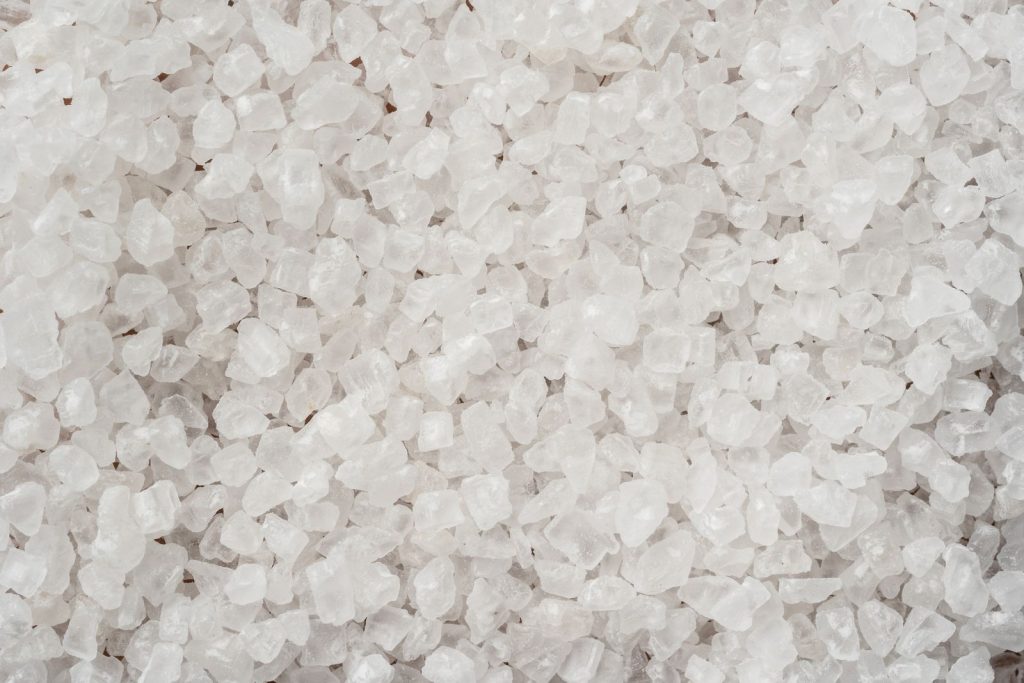
- Prevent it. Don’t fill the tank to the top: EPA says “the excess weight can create salt bridging.” Fill about half full, check every 4 to 6 weeks, and use pellets made for softeners, not rock salt, road salt or table salt.
Which pellets to buy and how much to add is covered in our guide to water softener salt.
Why does my softened water taste salty?
Start by separating two very different situations.
A slight, steady salty taste can be normal. The softener adds sodium in proportion to the hardness it removes: Penn State Extension puts it at “7.5 milligrams per quart for each gpg of hardness removed.” EPA’s 2003 sodium advisory gives 30 to 60 mg/L as the range where taste-sensitive people may start to notice it, so water softened from very hard water can taste a little salty even when everything works. Whether that sodium matters for anyone at home is covered in is softened water safe to drink?
A sudden, strong salty taste, especially right after a regeneration, suggests brine is getting into your water instead of being rinsed out to the drain. The cause depends on the unit, so we won’t guess at valve settings here. These checks are safe and quick:
If the water suddenly tastes salty
- Note when it happens: all the time, or only after a regeneration?
- Look at the drain hose: is it kinked, crushed or blocked where it meets the drain?
- Check whether a power outage interrupted a cycle, and reset the clock if needed (EPA).
- Look for water running to the drain all the time. EPA says “a continuous trickle or flow of water to the drain could indicate a broken valve or other malfunction.”
- If it continues, follow the troubleshooting section of your manual or call a service technician, and drink from an unsoftened tap until it’s fixed.
Running out of soft water too soon: a sizing check
If hardness returns a day or two before every regeneration, the softener may be too small for your household or set to the wrong hardness. EPA explains capacity with an example: a 32,000-grain softener “can remove 32,000 grains of hardness in a cycle before it needs to regenerate.” The University of Minnesota Water Resources Center says softeners “should be sized to work three to five days without regeneration,” and that one that is too small “will run out of soft water and need to regenerate more frequently.”
Worked example: a wrong hardness setting
Assumed: a 32,000-grain softener that regenerates based on metered water use. Your water is 15 grains per gallon (gpg) and the household uses 300 gallons a day. The softener was set up for 5 gpg.
- Real hardness load: 15 × 300 = 4,500 grains a day. The resin is spent after 32,000 ÷ 4,500 ≈ 7 days.
- What the softener thinks: 5 × 300 = 1,500 grains a day, so it waits 32,000 ÷ 1,500 ≈ 21 days to regenerate.
- Result: soft water for about a week, then about two weeks of hard water before the next regeneration.
days between regenerations ≈ capacity (grains) ÷ (hardness in gpg × gallons per day)Example with assumed values. Real units keep a reserve and vary in how they count, so check your manual. To convert ppm or mg/L to gpg, use our water hardness calculator.
The opposite mistake costs money instead of comfort. MDH says that if the hardness “is set too high, the softener will cost more to operate and waste water.” EPA adds that you “probably don’t need to schedule regeneration every day.”
Routine maintenance that prevents most problems
- Every 4 to 6 weeks: check the salt. Add more once the salt is below the water level; never let it drop below a quarter full (EPA).
- Every year: clean the resin. EPA says the beads “need to be cleaned annually,” usually by pouring a manufacturer-recommended cleaner into the brine well and running a regeneration.
- At least every few years: clean the brine tank. Let the salt run down, empty it, wash it with warm soapy water, sanitize with a bleach solution and rinse (EPA). NDSU notes the interval “depends on the amount and purity of the salt used.”
- After outages and trips: check the programming after power returns; use vacation mode or bypass when you’re away (EPA).
- Now and then: look for leaks at connections, valves and drains, and test the softened water.
Before adding chemicals: Penn State advises reading “the manufacturer’s instructions before adding any chemicals to the unit,” and MDH says resin cleaners must be used as directed “to avoid contamination.” When in doubt, follow the manual.
Frequently asked questions
Why is my water softener full of salt but the water is still hard?
The most common reason is a salt bridge: a hard crust that holds the salt above the water, so no brine forms. EPA recommends breaking it up with a broom handle, then running a regeneration. Also check the bypass valve and the hardness setting.
How full should the brine tank be?
EPA says to fill it about half full with softener pellets, check every 4 to 6 weeks, add salt once it falls below the water level, and not let it go below a quarter full. Filling to the top makes bridging more likely.
Is it normal for softened water to taste a bit salty?
A slight taste can be normal, because softening adds sodium in proportion to the hardness removed. A sudden, strong salty taste is not. Check the drain line and your manual, or call a technician.
How long does softener resin last?
The sources we checked give no fixed lifespan: resin deteriorates with use, and iron or sediment can foul it sooner. If a cleaned, correctly set softener still lets hardness through, have the resin checked.
Sources
- U.S. Environmental Protection Agency, WaterSense. Soften Water Without Wasting It: Guide to Selecting and Maintaining a Water-Efficient Water Softener, May 2026.
- Minnesota Department of Health. Water Softening.
- Penn State Extension. Water Softening.
- NDSU Extension. Water Softening (Ion Exchange), WQ1031, 2022.
- University of Minnesota Water Resources Center. Residential Softening.
- U.S. Environmental Protection Agency. Drinking Water Advisory: Consumer Acceptability Advice and Health Effects Analysis on Sodium, 2003.
Next step
If the problem keeps coming back
Calculator
Convert your water hardness
From mg/L or ppm to grains per gallon for your softener setting.