Quick answer
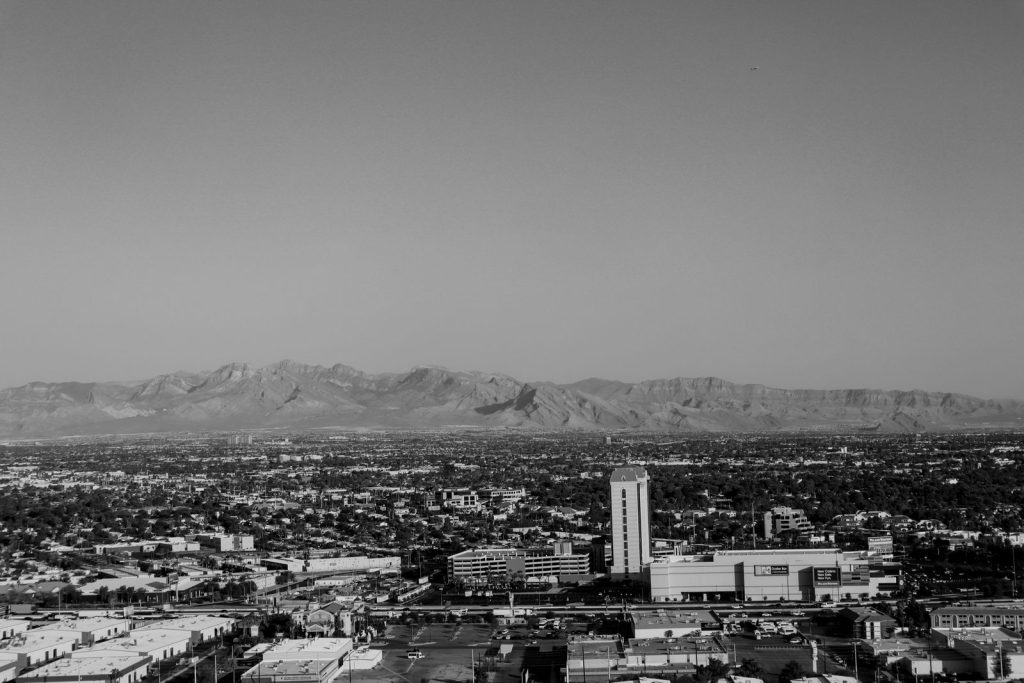
Las Vegas tap water is very hard. The Las Vegas Valley Water District’s 2026 Water Quality Report, based on 2025 data, gives a hardness of 280 parts per million (ppm), or 16 grains per gallon (gpg). That is well above 180 mg/L, where the US Geological Survey (USGS) scale starts “very hard”. The district says the hardness is an aesthetic issue that does not affect your health.
Las Vegas water hardness: the official numbers
The Las Vegas Valley Water District (LVVWD) serves more than 1.7 million people in the City of Las Vegas and parts of unincorporated Clark County. Unlike many utilities, it publishes hardness as a single system-wide average, not as a range or by treatment plant. Its Water Quality Summary lists the minerals behind that number. The table shows the latest report and the previous one.
| Parameter (average) | 2026 report (2025 data) | 2025 report (2024 data) |
|---|---|---|
| Total hardness (ppm) | 280 | 291 |
| Total hardness (grains per gallon) | 16 | 17 |
| USGS classification | Very hard | Very hard |
| Calcium (ppm) | 75 | – |
| Magnesium (ppm) | 24 | – |
| Sodium (ppm) | 89 | – |
| Total dissolved solids (ppm) | 591 | – |
Need other units, for example for a dishwasher or coffee machine made for European markets? 280 ppm as calcium carbonate is about 2.8 mmol/L or 15.7 °dH (German degrees). Our water hardness calculator converts any value between gpg, ppm, mmol/L and °dH.
What is the hard water level in your area? How to find it at your address
The water district does not offer a hardness lookup by address or ZIP code; it publishes one figure for its whole Las Vegas Valley system. The 2026 report notes one local difference: if you live or work in the northwest valley, or within several miles of the district’s offices at Charleston and Valley View boulevards, you may receive a blend of groundwater and treated Lake Mead water. It does not publish separate hardness values for those areas, so don’t guess.
- Use the official figure. The district itself says to set your water softener based on 280 ppm, or 16 grains per gallon. The same number works for a dishwasher’s built-in softener.
- Check who supplies you. Henderson, North Las Vegas and Boulder City are outside the district’s service area, so their own utility’s annual report applies. The district also runs small separate systems, such as Blue Diamond, Jean and Searchlight, with their own reports on its water quality reports page.
- Test it yourself. A hardness test strip gives a reading in a range, usually in gpg or ppm. Enter it in the calculator to convert and classify it.
Why Las Vegas water is so hard
According to the 2026 report, about 90 percent of the water comes from Lake Mead. Nearly all of the lake’s water starts as snowmelt in the Rocky Mountains and flows down the mineral-rich Colorado River. The river’s minerals, mainly calcium and magnesium, are what make the water hard. Lake Mead water is treated at the Southern Nevada Water Authority’s two plants, the Alfred Merritt Smith and River Mountains water treatment facilities.
The remaining 10 percent comes from wells that tap a deep groundwater aquifer under the Las Vegas Valley, refilled by rain and snow in the Spring Mountains and Sheep Range. The report says groundwater is used mainly between April and October to meet peak demand. The report also points out a side benefit: hard water is less corrosive to pipes.
What very hard water means day to day
The water district explains that hard water makes it difficult to produce a lather while washing and can leave a chalky build-up on fixtures and spots on glassware. The USGS adds that scale can shorten the life of appliances and lower the efficiency of electric water heaters. In practice:
- Laundry: follow the dosing on the package for hard water, or use a detergent that includes water-softening agents, one of the options the district lists.
- Dishwasher: if it has a built-in softener, set it to 16 gpg (see your manual) and keep the salt topped up; a rinse aid helps against spots.
- Kettle, coffee maker and water heater: descale more often than the minimum the manufacturer lists, and flush the water heater as its manual recommends.
- Faucets, counters and shower glass: the district notes that mineral spots only form when water evaporates, so wiping surfaces dry prevents most of them. For crust that has already built up, a lime- or mineral-dissolving cleaner works.
Is a water softener worth it in Las Vegas?
It is a question of comfort and cost, not health. The Southern Nevada Water Authority says removing calcium and magnesium “is not a necessity to protect your health” and that some people prefer softened water for bathing, cleaning and washing clothes. It lists the advantages as a softer feel when bathing, cleaner clothes, longer appliance life and fewer spots and deposits. The disadvantages it lists are potential health risks from sodium intake, harm to houseplants from the added salt and overload or reduced effectiveness of septic systems.
Two more points from the authority’s page are worth knowing before you shop. Units sold as “salt-free” softeners do not soften: they condition the water and leave the calcium and magnesium in it. And of the filter types it describes, only reverse osmosis removes calcium and magnesium.
Worked example (rule of thumb): University of Nebraska–Lincoln Extension estimates that an ion exchange softener adds about 8 mg/L of sodium for each grain per gallon it removes. Softening Las Vegas water at 16 gpg would add about 16 × 8 ≈ 128 mg/L, on top of the 89 ppm of sodium the water already contains. Many homes keep an unsoftened cold-water line at the kitchen tap. If you are on a sodium-restricted diet, ask your doctor about softened water.
Whatever you choose, maintain it: the water district warns that a poorly maintained home treatment system can reduce the quality of your drinking water. For a fuller comparison, see whether a water softener is worth it.
Frequently asked questions
Is Las Vegas water hard?
Yes, very hard. The Las Vegas Valley Water District gives 280 ppm, or 16 grains per gallon, in its 2026 report on 2025 data. The district itself categorizes this as “very hard”, and so does the USGS scale, which starts at 180 mg/L.
Which part of Las Vegas has the softest water?
The official data can’t answer that. The district publishes one average for the whole valley system and only says that parts of the northwest valley and the area near Charleston and Valley View boulevards may get a blend with groundwater. It gives no hardness by neighborhood.
What is the water hardness in Summerlin?
The district publishes no separate hardness value for Summerlin or any other neighborhood. If your water bill comes from the Las Vegas Valley Water District, use its system-wide figure: 280 ppm, or 16 grains per gallon, which the district itself recommends for setting a water softener. Its 2026 report adds that parts of the northwest valley may receive a blend of groundwater and treated Lake Mead water, without giving a separate number. For a reading at your own tap, a test strip is the simplest check.
Is hard water in Las Vegas safe to drink?
The district says the effects of hard water are solely aesthetic and don’t affect your health, and that the calcium and magnesium carried in from the Colorado River do not pose a health risk.
Sources
- Las Vegas Valley Water District. 2026 Water Quality Report (PDF, 2025 data), 2026 Water Quality Summary (PDF) and 2025 Water Quality Report (PDF, 2024 data).
- Las Vegas Valley Water District. Water quality FAQs and About the Water District.
- Southern Nevada Water Authority. Home treatment systems.
- US Geological Survey. Hardness of Water.
- University of Nebraska–Lincoln Extension. Drinking Water Treatment: Water Softening (Ion Exchange), G1491.